


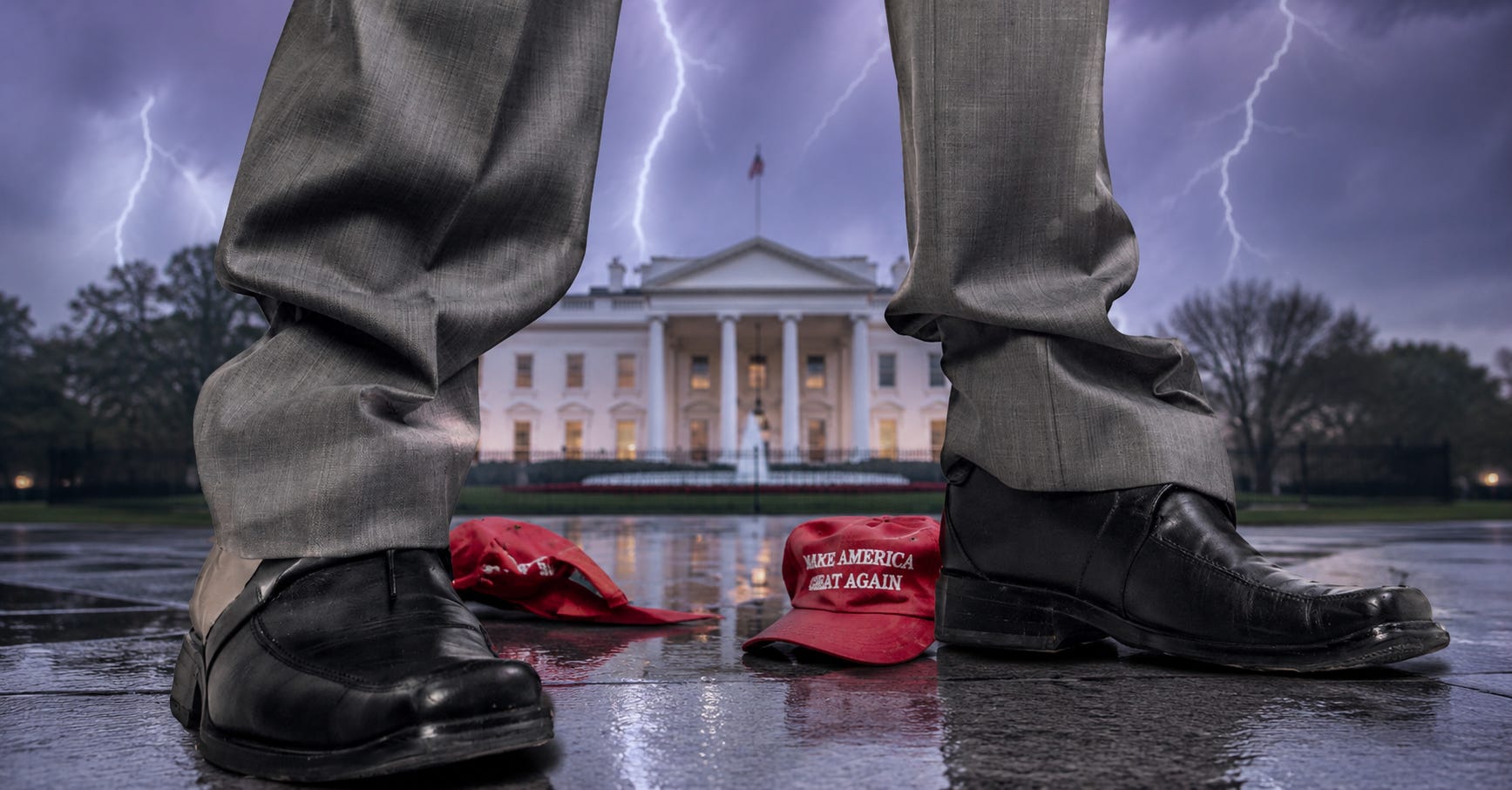
Trump’s ongoing assault on democracy is not a new experiment, but the latest chapter in a long American tradition of preserving power for white men at the expense of women and minorities.
Since January 2025, Trump has issued executive orders targeting diversity, equity, and inclusion programs across the federal government. He has pushed to erase what he calls “divisive, race-centered ideology” from schools, museums, and the Smithsonian Institution, seeking to rewrite history on his terms.
These actions serve a clear purpose: to police who belongs in American civic life and who gets to shape its memory. Combined with aggressive redistricting and voting rights rollbacks, Trump’s agenda aims to narrow the electorate and entrench minority rule under a veneer of legality.
This power grab marks a blunt, unapologetic return to tactics that have shaped U.S. politics since before the Civil War.
Trumpism openly revives the backlash against democratic expansions that extended citizenship and voting rights to Black men after Reconstruction and later to women.
His approach exposes the underlying strategy: use law, fear, and historical myth to maintain white male dominance whenever democracy threatens to broaden.

History has seen this trick before
The roots of Trump’s agenda trace back to the post-Civil War Reconstruction era. After slavery’s abolition, the Thirteenth, Fourteenth, and Fifteenth Amendments rewrote the constitutional order by granting birthright citizenship, equal protection under the law, and voting rights to Black men.
Southern states briefly saw multiracial governments and sweeping reforms that enshrined public education and labor rights.
This democratic expansion provoked a violent backlash known as Redemption.
White Southern Democrats, calling themselves Redeemers, used paramilitary terror groups like the Ku Klux Klan and Red Shirts to assassinate Black politicians and overthrow multiracial governments, as seen in the 1898 Wilmington coup.
They dismantled Reconstruction’s gains through poll taxes, literacy tests, and white primaries designed to suppress Black voters without explicitly violating the Fifteenth Amendment.
By 1910, Black political power in the South was all but erased, locking in a white male minority rule system known as the Solid South.
This cycle repeated itself in the twentieth century. The Brown v. Board of Education ruling in 1954 shattered legal segregation, inspiring the Civil Rights Act of 1964 and the Voting Rights Act of 1965.
These laws began dismantling Jim Crow’s legal barriers, registering hundreds of thousands of Black voters and challenging entrenched discrimination.
Yet the backlash morphed. The Southern Strategy of Nixon and Reagan repackaged white supremacy in coded language like “law and order” and “states’ rights,” appealing to racial resentment while avoiding outright racism.
Trumpism discards subtlety, embracing overt xenophobia, anti-immigrant rhetoric, and direct attacks on voting rights and historical memory.
White male minority rule never stayed secure
Despite decades of entrenched white male dominance, history reveals it never secured permanent legitimacy. Each wave of exclusion was eventually broken by coalition politics, mass organizing, and federal enforcement of constitutional rights.
The Nineteenth Amendment, which guaranteed women’s suffrage, closed the constitutional gap left by Reconstruction’s focus on “male inhabitants.”
Brown v. Board and the Civil Rights Act challenged the “separate but equal” myth and outlawed discrimination in public accommodations and employment, including on the basis of sex.
The Voting Rights Act dismantled literacy tests and intimidation tactics that had nullified Black citizenship for generations.
These legal victories translated into tangible political gains, like the registration of a quarter-million new Black voters by the end of 1965.
This pattern shows exclusionary regimes can dominate for decades yet still lose the broader battle for democracy.
Trump’s efforts to purge voters, gerrymander districts, and control public history echo the insecurities of past minority-rule projects. These measures expose their dependence on disenfranchisement and manipulation because they cannot win fair elections.
The current wave of suppressive policies is not a sign of strength but a desperate attempt to cling to power.
Trumpism needs minority rule because it cannot win fairly
Trump’s 2025 orders targeting diversity and inclusion programs are part of a calculated effort to narrow who counts as fully American.
His administration’s revival of the 1776 Commission and the “patriotic education” agenda seeks to rewrite history, erasing uncomfortable truths about slavery, systemic racism, and gender inequality.
This memory control is a cornerstone of his minority-rule project.
The Supreme Court’s April 2026 Louisiana v. Callais decision further undermined voting rights protections by striking down majority-Black districts as unconstitutional racial gerrymanders.
This ruling opened the door for rapid redistricting efforts aimed at diluting minority electoral power, with Republican legislatures in Tennessee, Texas, and Florida redrawing maps to consolidate partisan advantage.
Yet courts in Alabama and South Carolina have blocked some discriminatory maps, showing resistance is still possible.
Trumpism’s reliance on voter suppression, bureaucratic purges, and historical revisionism reveals a political coalition built on fear and exclusion rather than genuine democratic consent.
It isolates segments of the electorate - Black voters, immigrants, women, LGBTQ people, and educators - one by one, hoping to fracture opposition and secure minority rule.
⭐ No paywalls. No corporate script. Fact-based news powered by readers like you. ⭐
How to defeat it now
History offers a clear blueprint for defeating Trump’s bigoted power grab. Backlash movements have failed when opponents refuse to build broad coalitions rooted in moral clarity and shared democratic stakes.
Fusion politics - coalitions uniting multiracial voters, working-class people, women, and youth around common economic and social goals - have repeatedly broken exclusionary regimes.
Progressives must treat attacks on schools, museums, and history not as cultural side battles but as central fights for democracy. Supporting voting rights and election protection work at the local level is critical, as minority-rule politics almost always begins by shrinking the electorate.
Litigation and state-level resistance to unlawful maps and funding cuts can impose costs and delays on suppressive projects.
Refusing divide-and-conquer tactics that isolate vulnerable groups is essential. An attack on one group’s civic standing is an attack on everyone’s.
Clear, plain language from politicians and media must name Trumpism as a minority-rule project, not just another political divide.
Joining or funding local organizations that protect voting rights, support inclusive education, and promote truthful history will build the relational power needed to sustain democratic accountability.
Trump’s agenda can be beaten because past exclusionary regimes were broken through coalition, law, organizing, and an uncompromising defense of equality and truth.
The fight is urgent, but history proves it is winnable.
⭐ Share this widely if it speaks to you. These articles are never locked behind a paywall. ⭐
I love that you don't just vent. You offer viable solutions. Now all we have to get is a Congress that is interested in working for the people instead of making up excuses.
ABSOLUTELY TRUE!
VOTE 'EM ALL OUT!!