

Richard Nixon stands as a singular figure of malevolence in the modern history of American governance. Most associate his name with the bungled burglary at the Watergate complex or the subsequent cover-up that forced his resignation.
However, documents from the Lyndon Johnson presidency reveal a much darker truth that predates those scandals.
The 37th president secured his 1968 election victory by knowingly extending the Vietnam War. This was not merely a political dirty trick or a partisan maneuver. It was a calculated act of betrayal that sacrificed American blood for personal power.
Lyndon B. Johnson privately labeled the maneuver “treason,” and historical evidence now confirms this assessment was entirely accurate.
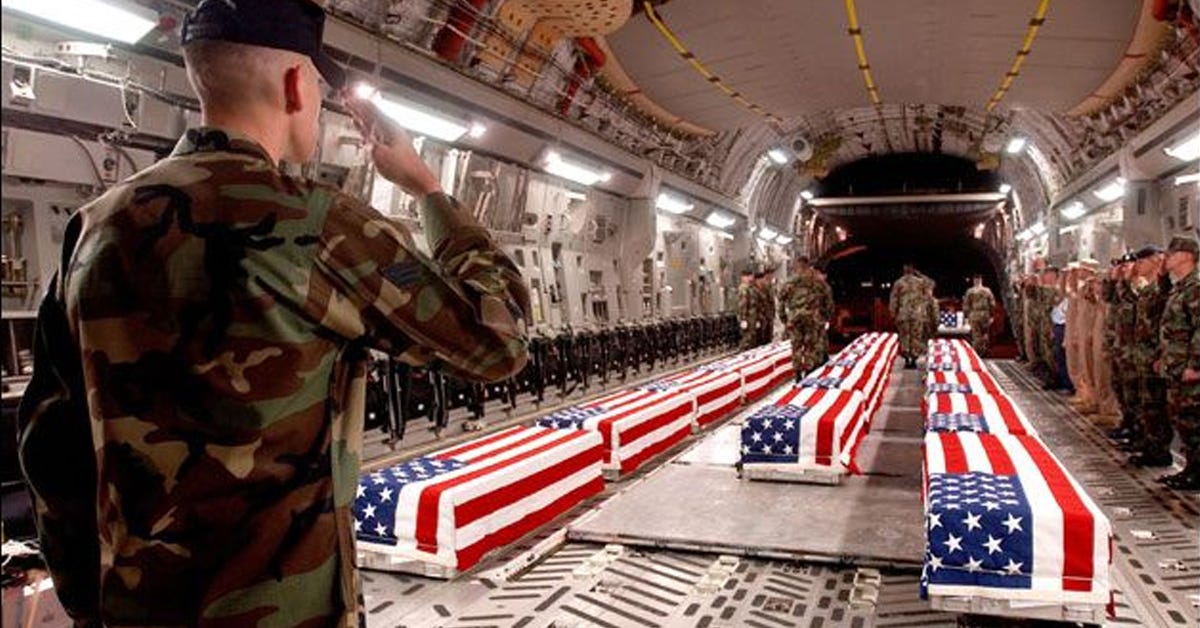
The cost of this ambition is quantifiable. We must look at the names on the Vietnam Memorial wall to understand the true price of Republican political strategy. Over 22,000 American soldiers died after Nixon took office, lives that were lost in a war he prolonged to ensure his own political survival.
These men did not die defending the homeland or preventing a domino effect of communism. They died because Richard Nixon wanted to be president.

The Tip from Wall Street
The unraveling of this conspiracy began on Wall Street rather than in a smoky political backroom. Alexander Sachs was a man who commanded respect in the highest corridors of power.
He was the economist and banker who had famously delivered the Einstein-Szilard letter to President Franklin D. Roosevelt in 1939, a communication that launched the Manhattan Project and the nuclear age.
Sachs contacted the Johnson administration in late 1968 with a terrifying piece of intelligence. He warned officials that Nixon’s financial backers were acting on inside information.
These financiers were placing market bets based on the certainty that the Republican nominee had a plan to “block” any peace settlement in Vietnam before the voters went to the polls.
Eugene Rostow, the Under Secretary of State for Political Affairs, received this tip and immediately recognized its gravity. He passed the information to his brother, Walt Rostow, the National Security Adviser.
The intelligence suggested that the Republican nominee was not merely observing the war from the sidelines but was actively directing foreign actors to sabotage United States diplomatic efforts.
This tip transformed vague suspicions into a concrete investigative lead. It suggested that Nixon was running a shadow foreign policy designed to frustrate the sitting government’s efforts to save lives.
The Dragon Lady’s Channel
Johnson took this warning seriously and ordered the FBI to monitor the communications of the South Vietnamese Embassy.
That surveillance uncovered a channel of betrayal running directly from the Nixon campaign to the government in Saigon.
The key operative was Anna Chennault. She was known as the “Dragon Lady” and served as the GOP’s top female fundraiser. Her fervor for the anti-communist cause made her an ideal, if dangerous, operative for the Nixon campaign.
FBI wiretaps captured her delivering a specific instruction to Ambassador Bui Diem. She told him to convey a message to his president, Nguyen Van Thieu: “Hold on, we are gonna win.”
This was a direct command to the South Vietnamese government to stall the Paris Peace Talks. The Johnson administration was on the verge of a breakthrough in October 1968. Hanoi had offered concessions that would have allowed for a bombing halt and the beginning of serious negotiations.
Chennault told the ambassador that a Nixon administration would offer South Vietnam a “better deal” than they could get from Johnson or Humphrey.
The Hypocrisy of “Peace with Honor”
Nixon campaigned on a platform of “Peace with Honor,” yet he stood before the American people and pledged to end the war while secretly working to ensure it continued.
Johnson confronted Nixon directly about the sabotage during a phone call. Nixon lied without hesitation. He told the President: “My God, I would never do anything to encourage Saigon not to come to the table.” He feigned shock at the accusations and assured Johnson that he wanted peace as much as anyone.
The Decision to Remain Silent
Democratic leadership possessed the smoking gun but refused to pull the trigger. Defense Secretary Clark Clifford and Johnson debated whether to go public with the evidence of treason.
They ultimately decided against it. They feared that revealing the information would require admitting that the FBI and NSA were spying on an American ally. Officials worried that such a revelation would cause a rupture in diplomatic relations and potentially destabilize the intelligence community.
Political calculations also played a role. Democrats believed Humphrey could still win without the “treason” bombshell, which might be viewed as a desperate, last-minute smear by the incumbent administration. J
Johnson also reportedly felt that the act was so heinous it might tear the country apart and cast doubt on the legitimacy of the presidency itself. So, he buried the evidence in the “X-Envelope” with instructions that it remain sealed for 50 years.
✊✊Join the resistance. Subscribe for more fearless commentary. Your support keeps this space open and ad-free.✊✊
The Cost in Blood: 1969-1973
The price of this political calculation was paid in blood. The war raged for another four years because Nixon needed time to save face and pretend he had achieved a victory.
Military records confirm that the total number of Americans killed in action after Nixon’s inauguration exceeds 22,000. These men did not die defending the homeland; they died because Richard Nixon refused to accept the peace deal that was on the table in 1968.
The 1973 Accords: A Useless Delay
The ultimate tragedy of the Chennault Affair lies in the specific terms of the final peace agreement. Representatives finally signed the Paris Peace Accords in January 1973.
The provisions of this treaty were shockingly similar to the framework Johnson had negotiated in October 1968. The agreement called for a ceasefire and the withdrawal of U.S. troops, but it allowed North Vietnamese troops to remain in South Vietnam - a concession that Saigon had vehemently opposed in 1968 but was forced to accept in 1973.
Nixon had kept the war going for four years to achieve a result that was effectively the same as the one he sabotaged. The “better deal” he promised Thieu never materialized.
South Vietnam was left in a weaker position in 1973 than it had been in 1968, and the country fell to North Vietnamese forces just two years later.
The delay purchased nothing but time for Nixon’s presidency. The 22,000 additional names on the Vietnam Veterans Memorial are the permanent receipt for Nixon’s ambition.
Conclusion: The “Bark Off” of History
Johnson famously said he wanted his presidential library to present history “with the bark off.”
The recent release of the Chennault tapes and the X-Envelope has finally allowed us to see the 1968 election in that light, and the image is ugly.
It shows a Republican candidate who was willing to subvert the Constitution and the Logan Act to win an election. It shows a party apparatus that viewed American soldiers as pawns in a political game.
The modern Republican Party often wraps itself in the flag, but the legacy of Richard Nixon proves that this has not always been the case.
The MAGA movement’s disregard for democratic norms and willingness to seek foreign assistance to win an election echoes the tactics of 1968.
🔥 Join thousands of supporters. Your subscription fuels unflinching truth and keeps every word free for all. No paywalls. Ever. 🔥
Nixon played politics with the war for four years so he could get Re-elected and then settled for the same terms he could have had when he was sworn in the first time. The 22000 American deaths pale in comparison to the millions of deaths caused by Kissinger and Nixon expanding the war into Cambodia and Laos. I remember the brutal Christmas bombing and the cynical “Peace is at Hand” statement. I thought no one could be worse until seeing what the current version of Republicans are up to now.
He was a crook and just as evil as the Trump regime.🤮🤮🤮🤮