


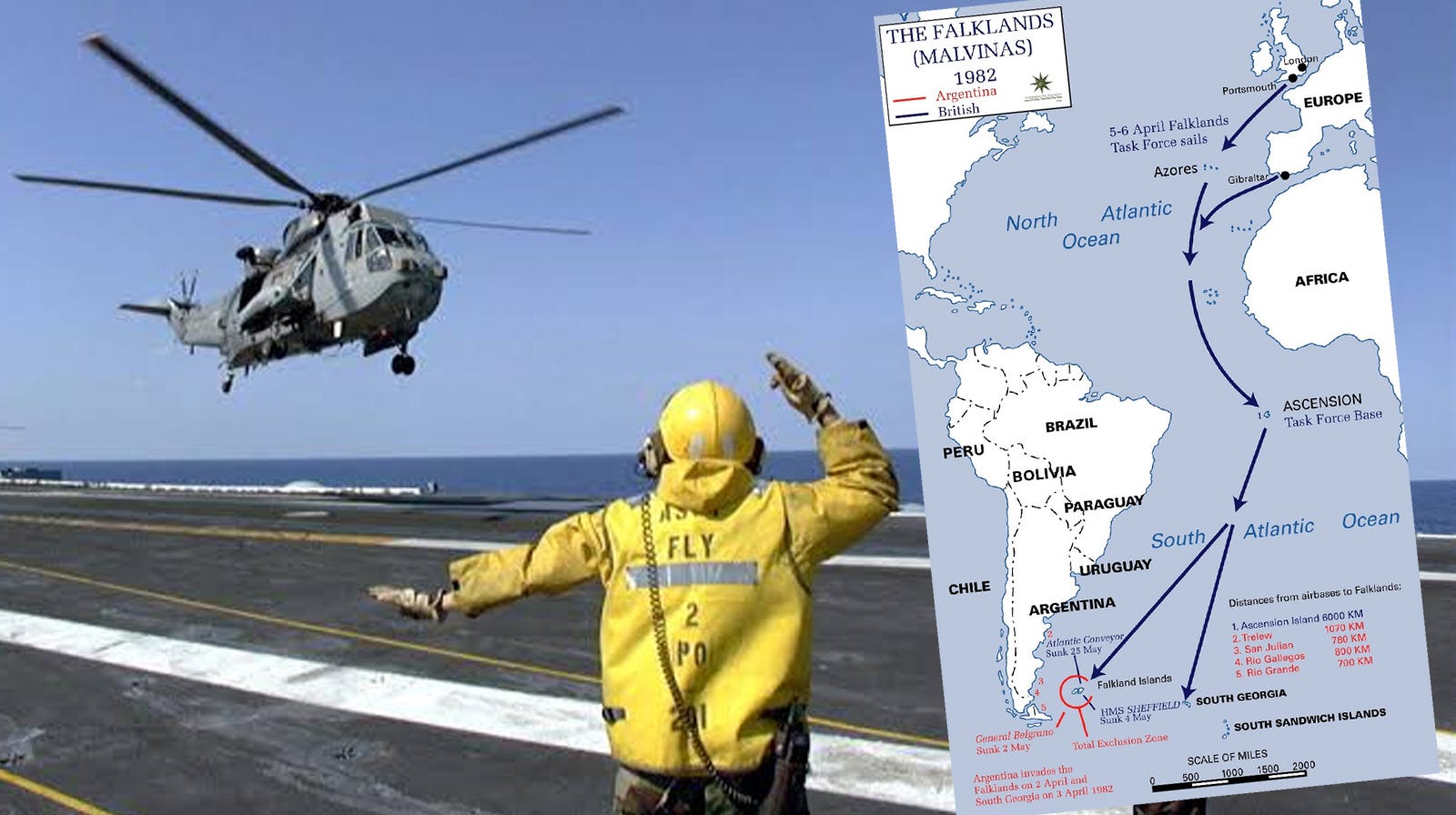
On Monday, August 31, 2026, Donald Trump made a remark during an Oval Office press gaggle that sent shockwaves through London, Buenos Aires, and Washington. A reporter asked whether the U.S. was reconsidering its stance on the Falkland Islands (known as the Malvinas in Argentina).
Trump’s response was brief but instantly weaponized:
“I always review every position. That’s just one of many.”
This single line has created a ripple effect. British headlines framed it as a warning shot to extract concessions from the UK on defense spending.
Argentine President Javier Milei called it “very significant,” even scheduling a national address on Argentina’s long-standing claim to the islands.
Trump’s ambiguous statement leaves room for interpretation, but the underlying strategy is clear.
Trump isn’t signaling a genuine policy shift. Instead, he’s wielding the specter of renewed UK–Argentina tensions as leverage to pressure Britain into boosting its defense budgets and NATO contributions.

What Actually Changed - And What Didn’t
To understand the implications of Trump’s remark, it’s critical to establish the status quo. Since the Falklands War in 1982, the United States has maintained a neutral stance on the islands’ sovereignty, while recognizing them as de facto under British administration.
As Reuters reports, Trump’s comment did not signal an immediate departure from this position:
“Trump did not signal if the review would change the United States’ position on sovereignty, which has generally avoided taking sides since 1982.”
In other words, U.S. policy remains officially unchanged. However, policy isn’t the point here. The remark functions as a diplomatic signal and a bargaining tool, not a legal or strategic reclassification of the islands’ status.
The Real Target: UK Defense Spending
Trump’s calculated ambiguity over the Falklands fits neatly into a broader pattern of behavior. Multiple outlets, including The Guardian and BBC, have reported that the comment is part of a larger effort to push the UK to increase its defense spending and meet revised NATO targets.
There is even chatter of a 5% GDP defense spending goal, a major jump from existing commitments.
As the Daily Telegraph noted, U.S. defense officials are actively considering proposals to incentivize NATO allies, including the UK, to meet these higher targets. One possible tactic? Threatening to oppose UK sovereignty over the Falklands. This idea was echoed by the BBC, which reported:
“Donald Trump has said the United States’ position on the Falkland Islands is ‘one of many’ under review, as he pressed the UK to increase military spending.”
For Washington, hinting at a policy shift is a low-cost strategy. For London, however, the Falklands are politically sensitive, symbolically tied to Britain’s global stature. This asymmetry makes the islands an effective bargaining chip.
Predictably, the UK government has dismissed Trump’s remarks. Foreign Office Minister Uma Kumaran stated firmly:
“The UK has no doubt about its sovereignty over the Falkland Islands. They are and will always remain a British overseas territory in line with the wishes of the Falkland islanders.”
Yet behind the public bravado, signs of capitulation are already emerging. British officials have hinted at increasing defense budgets - the exact outcome Trump’s leverage play was designed to achieve.
The Argentina Angle: Milei as a Convenient Ally
While London is the primary target of Trump’s Falklands gambit, Buenos Aires has also been drawn into the mix. Argentina’s far-right president, Javier Milei, immediately seized on Trump’s comment to reignite the country’s claim to the islands.
In a national address, Milei described the remark as “significant” and framed the Malvinas issue as a sacred cause for Argentina.
According to Mercopress, Milei declared:
“Yesterday something very significant happened. We are going to review what is happening on the international stage.”
Milei’s enthusiastic response underscores the strategic alignment between his administration and Trump’s White House.
Argentina under Milei represents the kind of partner the U.S. is eager to cultivate under Trump’s revived “Monroe Doctrine 2.0.” Buenos Aires has already begun limiting its ties with China and signaling closer cooperation with Washington on security and trade.
However, the Falklands issue is a useful but secondary concern in this dynamic. While Milei gets domestic political mileage from Trump’s remarks, Washington sees him as a tool to further its broader hemispheric strategy.
Monroe Doctrine 2.0: The Bigger Picture
Trump’s Falklands gambit is best understood within the context of his administration’s revival of the Monroe Doctrine.
First articulated in 1823, the original Monroe Doctrine declared the Western Hemisphere off-limits to European colonization or interference. Over time, it evolved into a declaration of U.S. dominance in the Americas.
In November 2025, Trump unveiled his administration’s updated vision, dubbed the “Trump Corollary” or “Monroe Doctrine 2.0.”
According to Corporate Knights, the new strategy aims to create a Western Hemisphere “free of hostile foreign incursion or ownership of key assets.”
The goal is to deny geopolitical rivals like China and Russia control over critical infrastructure, ports, and mineral resources in the Americas.
Tools for achieving this dominance include diplomatic pressure, visa restrictions, military presence, and trade incentives designed to make the U.S. the “partner of choice” for Latin American countries.
Trump himself described it as ensuring “American dominance in the Western Hemisphere will never be questioned again.”
The Falklands remark fits neatly into this playbook. It allows Trump to stir up tension over a frozen sovereignty dispute, unsettle a European ally, and reward an aligned Latin partner, all while signaling to China and other rivals that the hemisphere is contested territory.
💙 No paywalls, no ads. Just reader support. Free and paid subscriptions available. 💙
The Israel Connection: A Red Herring
Adding complexity is a viral social media post from Yair Netanyahu, son of Israeli Prime Minister Benjamin Netanyahu. In late August, Yair tweeted: “¡Las Islas Malvinas pertenecen an Argentina! [The Falkland Islands belong to Argentina!]”
While this statement has fueled speculation about a possible military alliance between the U.S., Israel, and Argentina over the Falklands, such claims lack credibility. No evidence suggests Washington or Tel Aviv is backing Argentina militarily.
The tweet appears to reflect closer ties between Israel and Argentina under Milei, not a coordinated foreign policy shift.
Counterarguments and Consequences
Critics of this analysis might argue that Trump is genuinely pro-Argentina on sovereignty. However, official U.S. statements remain neutral, and reporting consistently ties the Falklands remark to UK defense pressure.
Others might claim that ideology or Trump’s affinity for Milei explains the strategy, but the broader hemispheric agenda and NATO burden-sharing goals provide a more compelling rationale.
London may publicly dismiss Trump’s pressure, but the fact that defense spending increases are already on the table suggests the strategy is working.
What Happens Next?
Key signals to watch include explicit U.S. briefings linking the Falklands to UK defense targets and further British announcements of increased military spending.
If Trump’s rhetoric escalates or if the U.S. formally shifts its position on Falklands sovereignty, it would mark a significant departure from the current strategy.
Final Thoughts
Trump’s Falklands line isn’t a roadmap to war; it’s a negotiation tactic. The real audience isn’t in the South Atlantic; it’s in Downing Street.
The real prize isn’t sovereignty over the Falklands; it’s higher UK defense spending and a reasserted U.S. sphere of influence in the Americas.
💙 This post is public, so feel free to share it. 💙
By pushing the UK to increase defence spending, rump assumes they will buy from US defence suppliers, thereby placating the US military-industrial complex. That might work, or the UK could increase cooperation with European organizations and buy more from them. This is what the UK needs to do: sideline the US MIC as much as possible and remove any political leverage that present and future US admins have over them.
So much for the 'special relationship ' the UK has invested so much blood and treasure in.