


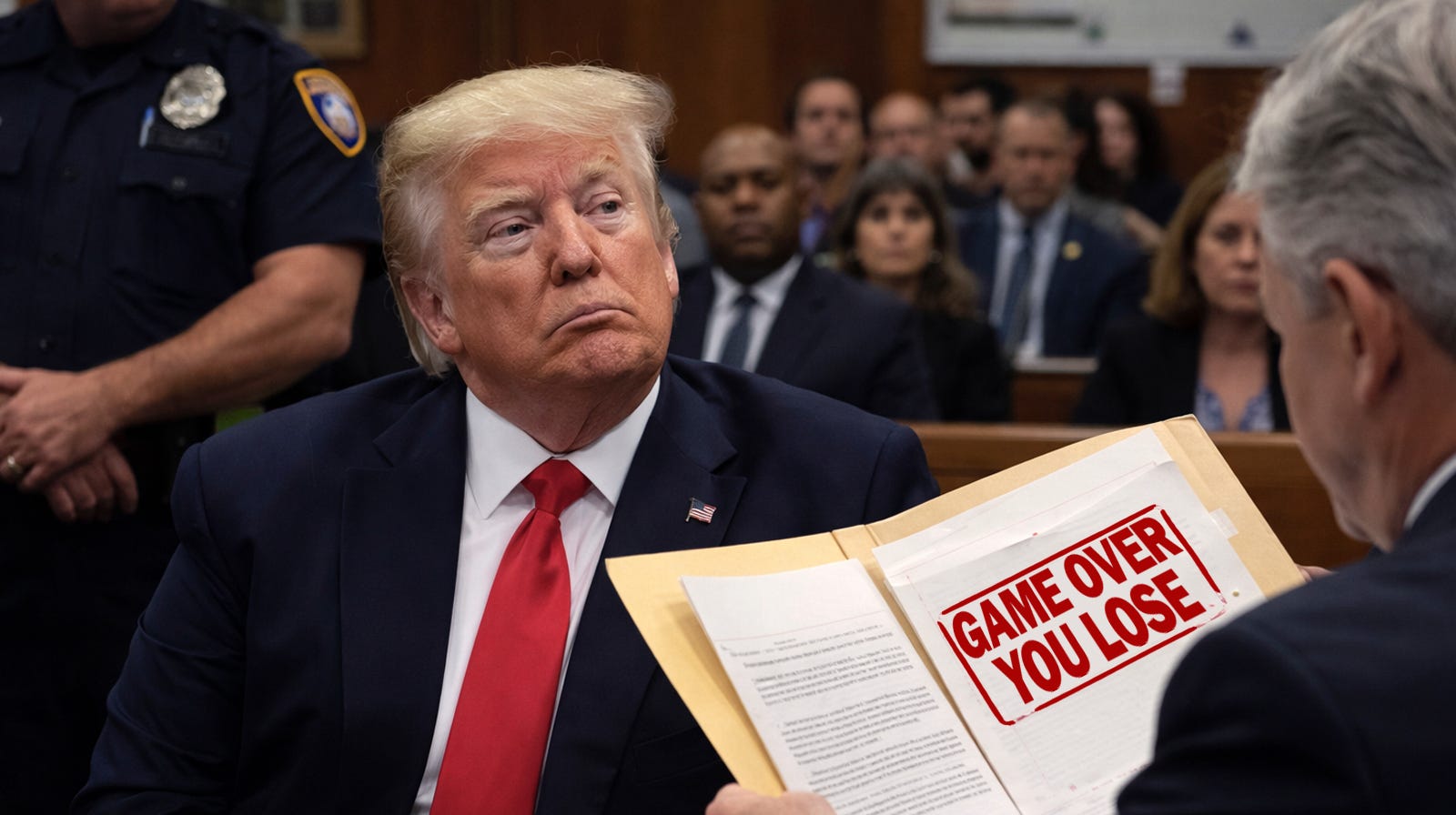
Trump loves a signature moment. There he was, November 19, 2025, pen in hand at the White House, signing the Epstein Files Transparency Act (EFTA, H.R. 4405, Public Law No. 119-38) into law.
The crowd loved it. “Transparency,” he declared, the man who has spent a lifetime making things disappear.
The law was straightforward: the Department of Justice had 30 days to release every unclassified record in its possession related to Jeffrey Epstein, Ghislaine Maxwell, and their network of powerful associates. Flight logs. Immunity deals. Internal DOJ communications.
Even documentation of Epstein’s suspicious death. All of it. By December 19, 2025.
Then Trump got to work making sure that didn’t actually happen.The scheme he cooked up is almost too brazen to believe, which, at this point, is really saying something.
Trump quietly began stacking the federal records infrastructure with a single loyalist, a man whose entire career advancement depends on keeping him out of trouble. That man is Todd Blanche, formerly Trump’s own personal criminal defense attorney.
The law is still on the books. Trump’s signature is still on it. And courts, historically, tend to care about that sort of thing.

The Nut Graph: One Lawyer to Rule Them All
Blanche is not a household name, but he should be. He is the person now positioned to decide what the American public gets to know about both Jeffrey Epstein and Donald Trump’s own presidency.
Blanche currently holds three overlapping roles that, taken together, give him near-total control over the federal records that matter most:
He has served as Trump’s personal representative to the National Archives and Records Administration (NARA) since September 2023, functioning as a private gatekeeper over Trump’s presidential records.
Trump dismissed Librarian of Congress Carla Hayden in May 2025 and installed Blanche as Acting Librarian, expanding his reach into federal institutional records.
Trump fired Attorney General Pam Bondi in April 2026 and made Blanche the Acting Attorney General, effective April 2, 2026, placing him directly in charge of DOJ compliance with the very Epstein transparency law Trump signed.
Meanwhile, in April 2026, the DOJ’s own Office of Legal Counsel (OLC) issued a memo declaring the Presidential Records Act of 1978, the nearly 50-year-old law requiring presidents to preserve and eventually release their official records, unconstitutional.
The memo conveniently reclassifies Trump’s presidential records as his personal property. No law, no archive, no public access.
The DOJ claims it has released over three million pages of Epstein documents. The Washington Post reports that “big questions remain unanswered,” with members of Congress still demanding explanations for missing files and contested redactions.
The Turn: “Transparency” Was Always a Costume
Here is the contradiction Trump cannot spin his way out of: he is simultaneously the man who championed Epstein transparency and the man methodically installing his former criminal defense lawyer into every institutional chokepoint that controls what gets released.
The EFTA is explicit. Redactions cannot be made on the basis of embarrassment, reputational harm, or political sensitivity. Each redaction must be justified in writing and published in the Federal Register.
The Attorney General, now Blanche, must report to Congress every category of record released or withheld, along with a list of every government official, public figure, or foreign dignitary named in the files.
Blanche cannot simply wish these requirements away. Neither can an OLC memo.
Legal scholars and watchdog groups have been unambiguous: the OLC’s opinion that the Presidential Records Act is unconstitutional is not a court ruling. It is a legal interpretation from an office that works for the executive branch, written specifically to serve the executive branch.
Federal courts have repeatedly upheld the PRA, and any serious legal challenge to the OLC memo is expected to fail. The word “likely” is doing minimal heavy lifting here.
The timing is also hard to miss. The 2026 midterm elections are approaching, and an administration desperate to limit what voters know before November is running out of legal tools to do it.
The Consequences: The Walls Are Closing In
Trump built himself a trap. Courts do not typically defer to legal memos that contradict decades of established precedent, and the OLC opinion on the PRA is headed for exactly the legal beating it deserves.
The EFTA is arguably worse for him. A federal judge looking at a law Trump personally signed, which carries explicit compliance requirements, explicit reporting mandates, and an explicit prohibition on politically motivated redactions, is not going to find much room for creative interpretation.
Every day Blanche sits atop the DOJ, NARA, and the Library of Congress, the accountability deficit compounds. Watchdog groups are already documenting what is being withheld and why. Congress has been put on notice.
The paper trail of obstruction is being written in real time.
Trump’s instinct has always been to grab every lever available and pull until something breaks. What he miscalculated is that he already signed the law.
The lever he is now pulling belongs to the public, and eventually, it will pull back.
👉 My work is always free and never paywalled, but it survives entirely on reader support. Help sustain independent media. 👈
One can only hope for sanity in US government. Sooner or later the cycle will cause some adjustments, but most likely later and not completely undoing all the damage caused by the old mad man-child and his gang of clowns. Sad but it's what a lot of Americans asked for.
You would think that Todd Blanche would see Bondi’s firing as a cautionary tale, but they are all too naive to think it will ever happen to them. They all like to be close to the seat of power no matter the cost of surrendering their soul. Everyone in trump’s orbit think they can fly close to the sun without getting scorched, not willing to see the ashes all around him. As they say, “everything trump touches dies”, It’s only a matter of time.