


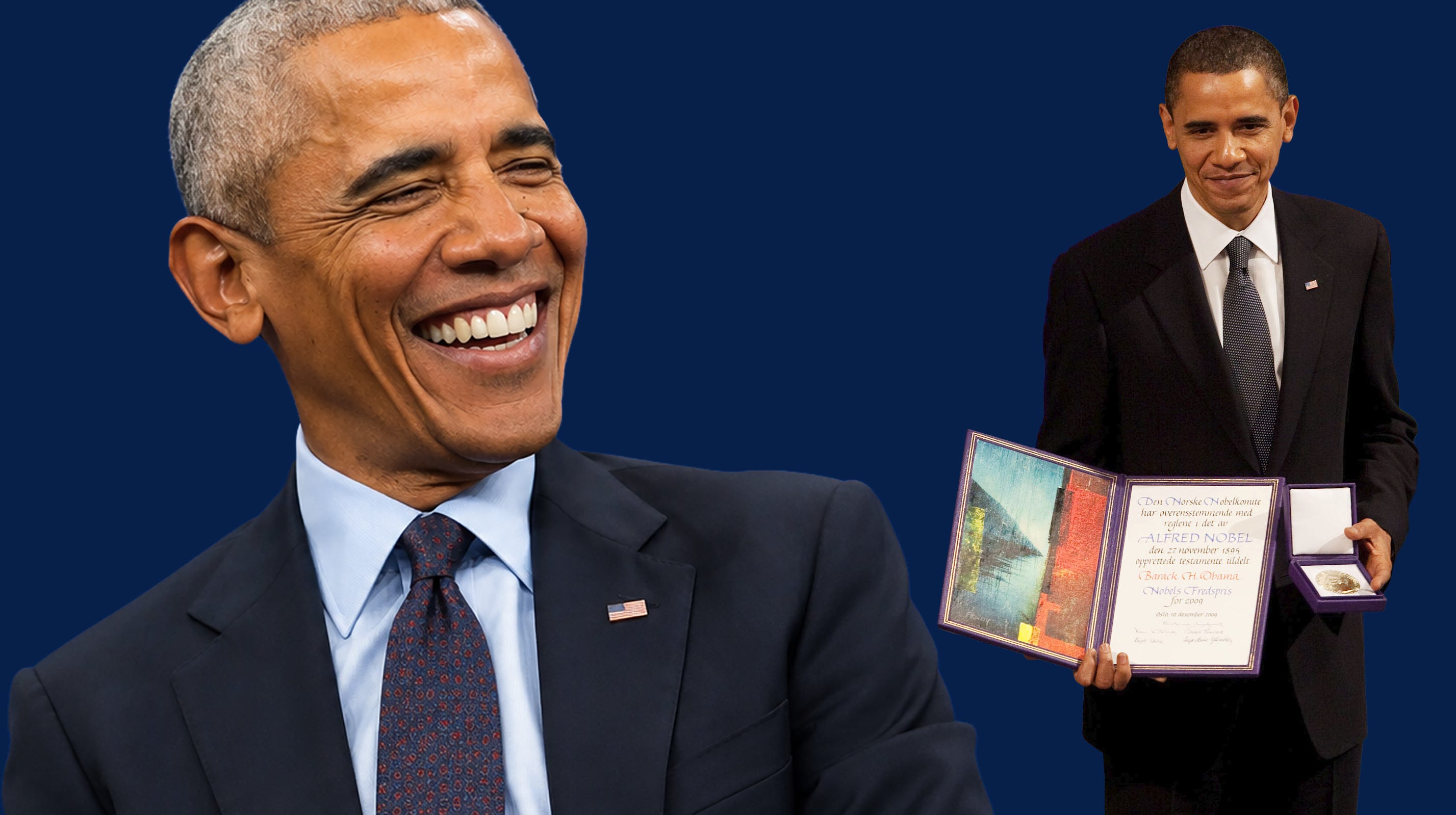
Trump wanted a triumphant Iran war, the kind of chest-puffing spectacle his movement could sell as genius, strength, and maybe even Nobel Peace Prize bait if the lighting was right.
Instead, distinguished professor and defense and security analyst Michael Clarke’s analysis suggests Trump may end up staggering back toward the same basic nuclear framework he and the MAGA chorus spent years trashing because Barack Obama had his name near it.
That is the humiliation hiding beneath the smoke. Trump does not just hate Obama’s policies. He hates Obama’s stature, Obama’s calm, Obama’s global respect, and Obama’s Nobel Prize.
Respect is the one thing Trump cannot buy, bully, litigate, or slap his name on in gold letters.
Now Clarke says the best America may hope for is something that looks a lot like the former president’s 2015 Iran nuclear deal.

Clarke’s Evidence Is Brutal
Professor Clarke discussed the Iran war with host Kamali Melbourne during a recent question-and-answer session hosted by Sky News.
Clarke is not some random cable screamer filling airtime. He’s a visiting professor at King’s College London and the University of Exeter, a former Director-General of the Royal United Services Institute, and a long-standing analyst of defense, security, and geopolitics.
Clarke’s verdict on Trump’s war was devastating because it was so plain. Asked what the Americans had achieved, he said “the best you can expect now” is a return to “something that looks like the 2015 deal” on Iran’s nuclear program.
He added that such a deal would be “a restraint but not an end” to Iran’s nuclear ambitions, and that “probably nothing will be achieved” on Iranian ballistic missiles or Tehran’s support for regional proxies.
That is not victory. That is Obama’s old homework with blood on it.
MAGA Strength Met Reality
Trump has spent years selling the fantasy that foreign policy is just bullying with better branding. Threaten harder. Insult louder. Bomb faster. Declare victory before anyone checks the map.
Clarke’s analysis shreds that cartoon. The war did not appear to force Iran into submission. It did not appear to produce a grand bargain.
It did not appear to solve the missile issue. It did not appear to break Iran’s proxy network. It did not even appear to leave Trump with a shiny new replacement for the deal he hated.
Clarke put the likely result in language that should be carved into the side of Trump’s next self-congratulatory press release. The Americans, he said, may achieve “a return to the situation of a sort that they had in 2015 with probably not much else to show for it.”
That is the Trump doctrine in miniature: smash the furniture, call it renovation, then ask where Obama kept the instruction manual.
Iran’s Hardliners Got the Real Prize
Clarke did not romanticize Iran or pretend the regime emerged morally vindicated. His point was colder and more serious. The Iranian people paid an enormous price, while the most dangerous elements of the regime survived.
Clarke said the war came at “enormous cost to the 90 million people of Iran,” but what it achieved inside Iran was “the consolidation of a military,” meaning the Islamic Revolutionary Guard Corps.
He described the result as no longer simply a theocratic dictatorship, but “a military dictatorship with trappings of theocracy.”
That is a catastrophic outcome for anyone pretending this war was about weakening the regime. The Iranian people suffer. The IRGC digs in. Trump gets to pose for cameras. MAGA gets its dopamine hit. Then the strategic ledger comes due.
Clarke summed up Iran’s achievement in one word: survival. Authoritarian regimes do not need love. They do not need legitimacy in any democratic sense. They need to outlast the attack and tell their supporters they endured America’s fury.
Trump handed them that story.
⭐ No paywalls. No corporate script. Fact-based news powered by readers like you. ⭐
The Decapitation Fantasy Failed
Clarke explained the military logic in stark terms. A country at war tries to attack the enemy’s “political center of gravity.” The bombing campaign targeted the IRGC, its bases, and Iran’s power structure in an attempt to decapitate the regime.
His verdict was blunt: “Didn’t work.”
That failed strategy created a second problem. Clarke said the United States then had to turn toward Iran’s military center of gravity, which he identified as the Strait of Hormuz.
American forces could go into the strait and win a direct fight, he argued, but “there’d probably be losses.” Then came the line that cuts straight through Trump’s fake-warrior act: “President Trump isn’t prepared to take that cost.”
Trump wanted the TV version of war. He wanted shock, awe, submission, ratings, and maybe a round of international applause. Clarke’s analysis suggests he did not want the actual price of forcing the outcome he promised.
That is not toughness. That is costume-rack militarism.
Hormuz Became Iran’s Leverage
Melbourne asked whether Iran had achieved some sort of control over the Strait of Hormuz. Clarke did not wave it away. He said that “if that’s an achievement,” Iran had achieved it, and warned that “the Strait of Hormuz will probably never go back entirely to the way it was before.”
That matters because Hormuz is not a prop in Trump’s strongman theater. It is a critical maritime chokepoint with consequences for international law, free movement, and the global economy.
Clarke said the chance of the strait returning to its prewar condition was “fairly remote indeed.”
So here is the scoreboard Trump will not Truth Social: Iran’s hardliners survived, the Strait of Hormuz became more dangerous, American credibility took a hit, and Washington may crawl back toward an Obama-era framework.
Some master negotiator.
China Can Smell the Blunder
Clarke also described how China may view the conflict. He said Chinese leaders see what America is doing as “a huge strategic blunder,” adding the logic: “Never disturb your opponent while he’s making a mistake.”
That should sting. Trump wants to look dominant heading into global showdowns, but Clarke said he went to China with the war “hanging around his neck like a millstone.” He also said Trump was in a weaker position because of the war and had “miscalculate[d] the strategic” pros and cons.
Trump craves respect from the world’s strongmen almost as much as he craves revenge against Obama. Clarke’s analysis suggests he may get neither. Xi can watch. Iran can wait. Allies can de-risk. Trump can rant.
The world keeps score in leverage, not adjectives.
Obama Still Owns the Punchline
Trump’s Iran war now looks like a foreign policy faceplant with an Obama-shaped punchline.
The man who mocked the 2015 deal may need its basic architecture. The man who covets Obama’s Nobel aura may have to settle for Obama’s policy shadow. The man who mistakes fear for respect may discover, again, that respect cannot be extorted.
Clarke’s conclusion leaves Trump trapped. Negotiation means drifting back toward the kind of nuclear restraint framework he despised. Escalation means more risk, more losses, more instability, and more proof that the original strategy failed.
Trump promised a better deal, a tougher deal, a tremendous deal. Clarke’s interview points to something smaller and more humiliating: a return to 2015 with “probably not much else to show for it.”
That is not peace through strength. That is Trump wandering through the rubble, looking for Obama’s notes, and hoping nobody notices.
⭐ Share this widely if it speaks to you. These articles are never locked behind a paywall. ⭐
Thanks for this. I agree with the analysis mostly, but I don't think Trump will get to anything like the Obama framework of a deal, it takes too long and he will get bored of the effort.
Iran made the deal with President Obama because in the end they knew that the other countries backed the plan and America's standing in the world views. They trusted President to be fair and would keep his word.
But now, because of trump, Iran knows that trump cannot be trusted and our standing across the globe is in the toilet. After all, why should Iran, or any country, trust anything traitor trump says when he is willing to betray the people and his own country.
All the traitor has done is promote more attacks from Iran that will be worse than the attacks on 9/11.