


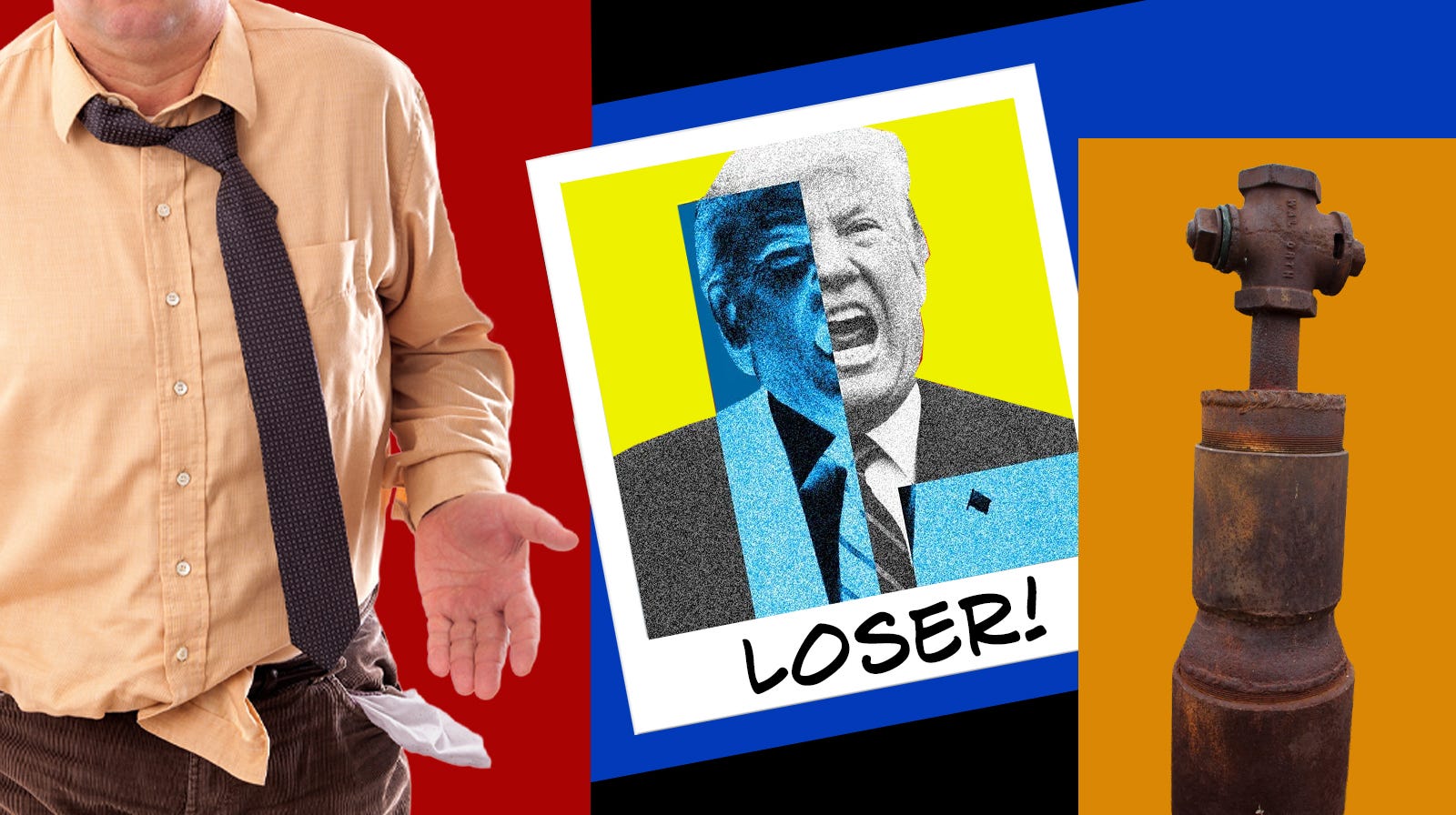
Donald Trump stood before the cameras at his Florida estate and declared ownership of Venezuela’s resources with the casual arrogance of a landlord seizing a tenant’s security deposit.
Trump announced that the United States would now “run” the country and that American corporations would seize control of Venezuela’s vast petroleum reserves to “reimburse” themselves and the U.S. government for the trouble of the invasion.
Trump explicitly framed the operation as a transaction. He promised that the “biggest [companies] anywhere in the world” would flood into the Orinoco Belt, rebuild the shattered infrastructure, and extract wealth to pay for the military adventure.
His announcement assumes that the mere presence of American power is sufficient to reverse decades of economic rot.

The $183 Billion Reality Check
Industry experts immediately began dismantling the White House’s optimistic projections following the announcement. The gap between Trump’s promises and the physical reality of Venezuela’s oil fields is measured in billions of dollars and decades of time.
Analysts from Rystad Energy, a leading consultancy, provided a sobering assessment that contradicts the administration’s timeline entirely. Their data suggests that restoring production to levels seen in the late 1990s is not a matter of months, but of fifteen years or more.
Trump’s team appears to have calculated the value of the oil in the ground without subtracting the astronomical cost of getting it out. They have confused reserves with revenue.
Venezuela does indeed possess the world’s largest proven oil reserves - some 303 billion barrels - but reserves are meaningless if the cost of extraction exceeds the market price.
Trump is attempting to sell the American public on a heist where the getaway car has no engine. Revitalizing Venezuela’s oil sector requires a level of capital investment that borders on the fantastical.
Rystad Energy estimates that simply maintaining current production levels of roughly 1.1 million barrels per day (B/D) would require $53 billion in investment over the next 15 years.
This figure merely prevents the industry from collapsing further; it does not add a single new barrel to the global supply.
The Money Pit
Capital requirements of this magnitude turn Trump’s promise of “reimbursement” into a financial black hole.
The breakdown of costs includes replacing corroded pipelines, rebuilding power grids that fail daily, and importing specialized equipment that has been looted or destroyed.
Every pump, valve, and storage tank in the supply chain requires assessment or replacement. The notion that this can be done quickly or cheaply is a fabrication.
Returning production to the 3 million B/D mark, a level last achieved in the early 2000s, would necessitate an estimated $183 billion in capital expenditure.
This sum exceeds the combined global capital spending of the top five U.S. oil majors in 2024 by nearly $20 billion.
Trump is asking American companies to commit their entire balance sheets to a single, volatile country.
The Sludge in the Ground
A critical error in the MAGA narrative is the assumption that all oil is created equal.
Trump speaks of Venezuelan crude as if it were the light, sweet oil that bubbles up from the sands of Saudi Arabia or the shale of Texas. It is not.
The vast majority of Venezuela’s reserves are located in the Orinoco Oil Belt, which produces extra-heavy crude. This substance is less like liquid fuel and more like tar or molasses.
Sofia Kinzinger, an energy analyst, notes that Orinoco crude is “demanding, expensive, and unforgiving.” Extracting it requires complex, energy-intensive processes.
The oil must be heated or diluted with imported chemicals just to make it fluid enough to move through a pipeline. It cannot simply be pumped out of the ground and shipped.
It requires “upgraders” - massive industrial facilities that pre-refine the sludge into a transportable commodity. These upgraders are the bottleneck of the Venezuelan industry. Many have fallen into disrepair or have been stripped for parts.
Restarting them is not a matter of flipping a switch. It involves rebuilding complex chemical engineering plants in the middle of a region plagued by power outages and crime.
The technical reality of heavy crude means that Venezuela has one of the highest break-even prices in the world. Producing a barrel of Orinoco oil costs significantly more than producing a barrel of West Texas Intermediate.
The Economics of Failure
Economics, ultimately, will be the judge of Trump’s plan. The global oil market is currently awash in supply. Prices hover around $60 per barrel, driven down by record production in the U.S., Guyana, and Brazil, alongside tepid demand from China. This price environment is toxic for Venezuelan investment.
Claudio Galimberti, chief economist at Rystad Energy, estimates that the breakeven price for new Venezuelan projects is approximately $80 per barrel.
The math is simple and brutal. It costs more to extract the oil than it can be sold for on the open market. No CEO will authorize a project that guarantees a loss of $20 on every barrel produced.
Trump is asking companies to fight market gravity. He is proposing investment in one of the world’s most expensive production environments during a period of low prices.
Unless the U.S. government is willing to heavily subsidize these companies - transferring wealth from taxpayers to oil executives - the projects will not happen. The “profit” Trump promises is a mirage.
⭐⭐Join the resistance. Subscribe for more fearless commentary. Your support keeps this space open and ad-free.⭐⭐
The Memory of Theft
Trump’s plan relies entirely on the cooperation of major U.S. oil companies. He assumes that giants like ExxonMobil and ConocoPhillips are eager to rush back into the country. History suggests otherwise.
These corporations have deep, traumatic scars from their previous ventures in Venezuela. The late Hugo Chávez systematically dismantled foreign ownership of the oil sector, culminating in the massive expropriations of 2007.
ExxonMobil and ConocoPhillips were the primary victims of this nationalist purge. Chávez forced them to hand over majority control of their projects to the state-owned PDVSA. When they refused, their assets were seized outright.
ConocoPhillips is still seeking to recover approximately $12 billion in lost assets, while ExxonMobil pursues nearly $2 billion. These are not theoretical debts; they are the subject of bitter, years-long international arbitration battles.
Corporate boards operate on risk assessment, not presidential whims. The idea that these companies would pour billions of fresh capital into a country that stole their assets two decades ago is laughable without ironclad guarantees.
The Chevron Exception
Chevron stands as the sole exception to the exodus of American capital. The company remained in Venezuela when its peers fled, navigating a complex web of sanctions and joint ventures to keep a foothold in the country.
Trump and his allies point to Chevron’s continued presence as proof that the industry is ready to return. This is a misreading of the situation.
Chevron’s operations are strictly limited and governed by specific licenses from the U.S. Treasury. They produce roughly 150,000 to 200,000 B/D - a fraction of the country’s potential.
Their strategy has been one of grim persistence rather than enthusiastic expansion. They have stayed to protect their existing assets, not to build new ones.
The Lose-Lose Conclusion
The “Great Venezuelan Heist” is destined to join the wall of shame of failed American interventions. It is built on a foundation of bad math, bad geology, and bad history.
It ignores the agency of the Venezuelan people, the rights of creditors, and the realities of the climate crisis. Trump’s plan is a zombie policy - a reanimated corpse of 19th-century imperialism stumbling into a 21st-century world.
⭐⭐ The Art of Living articles are never paywalled.⭐⭐
i learned a lot from this up to date analysis. Thank you.
EVERYTHING TRUMP TOUCHES DIES!