

History Guarantees We Will Survive and Defeat Trumpism
Answered: The Question Every Liberal and Progressive Is Afraid to Ask Out Loud

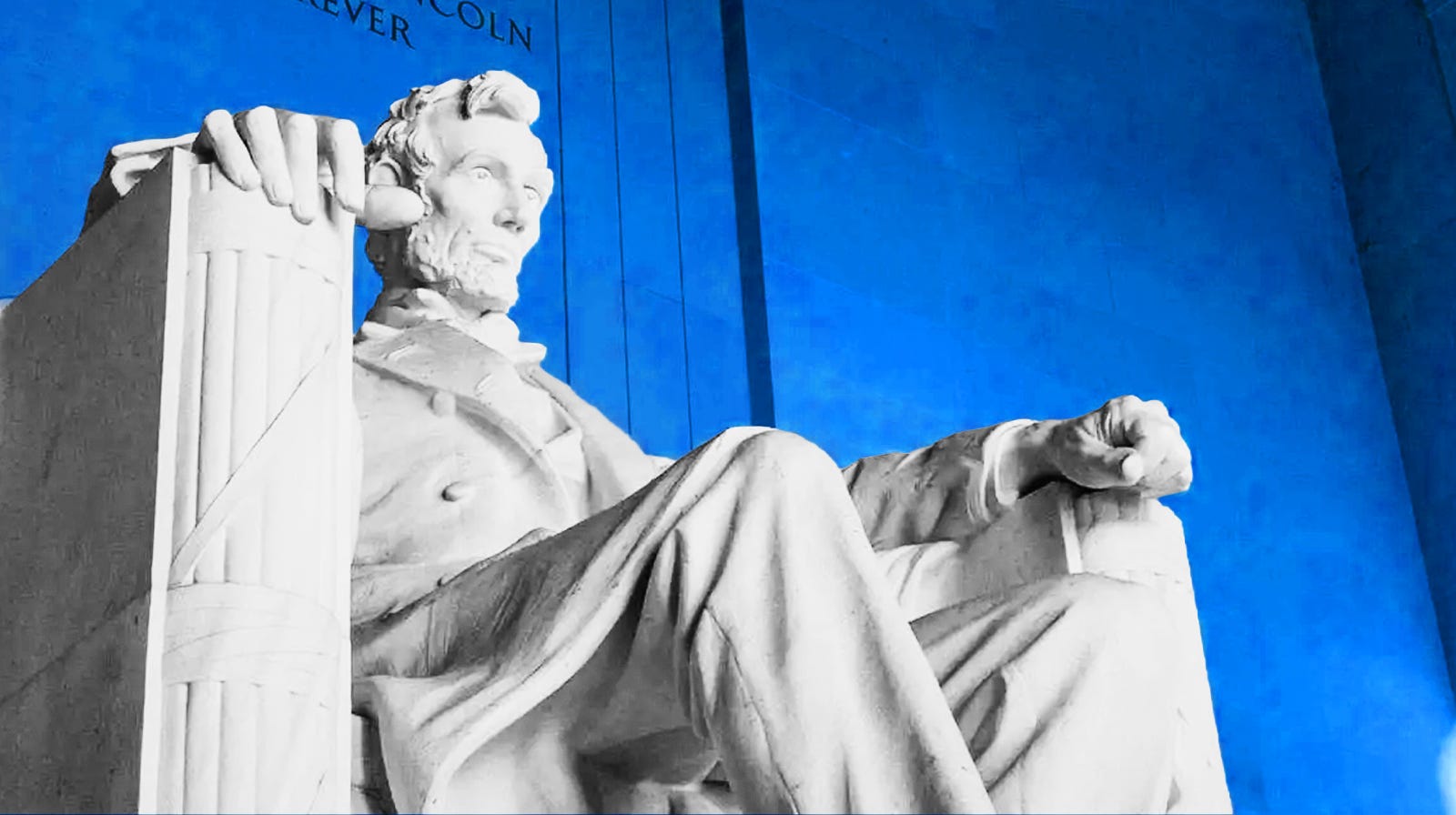
The question was whispered backstage and then asked aloud in front of a packed room at the 92nd Street Y in New York City on June 24, 2026.
MS NOW anchor Nicolle Wallace turned to documentary filmmaker and self-described “accidental historian” Ken Burns and posed what may be the defining question of this political moment: “Are we going to make it? Yes, I’m going to need your evidence-based response.”
Burns didn’t pause. He didn’t hedge. He answered with historic precedence.
The threat is real, Burns acknowledged. Free elections are under assault. Judicial independence is eroding. The Supreme Court has gutted the Voting Rights Act, and a Republican-controlled Congress has wholly abandoned its constitutional role in the face of authoritarian overreach.
Burns argues, that the republic has survived far worse than this. And that knowledge, he insists, changes everything.

The Historical Case for Not Despairing
Burns made his case with the precision of a closing argument. He laid out what he called America’s “three great crises” after the nation’s founding: the Civil War, the Depression, and World War II. Each one looked, to the people living through it, like the end. None of them were.
Burns explained. “We were way more divided during our Civil War, where we murdered, we now think, well over 700,000 of our own people.” The Vietnam era, from 1969 to 1975, saw “hundreds and hundreds of bombings” across the country. Burns challenged the room to name the last domestic bombing they could recall. The contrast, he suggested, speaks for itself.
Burns also described what he calls the “tempering” that comes from studying history, a reduction of anxiety rooted not in false optimism but in comparative evidence. That tempering, he argued, is not passivity. It is the steady confidence that comes from knowing, with certainty, that the American experiment has absorbed catastrophic blows before and kept moving forward.
That is not dismissal. That is proportionality. And proportion, Burns argues, is one of the most powerful tools a person can carry through a dangerous political era.
Hamilton, Jefferson, and Lincoln All Saw This Coming
One of the most arresting moments of the interview came when Burns revealed a quote he deliberately cut from his American Revolution documentary, one that felt almost too on-the-nose for the current moment. Thomas Jefferson, writing to James Madison from Paris more than 240 years ago, asked what would happen if “someone should lose an election but pretend false votes and reap the whirlwind.”
Burns pulled the line because he worried it would feel too nakedly pointed at one specific living person. But that discomfort is itself the point. The founders were not describing an abstract hypothetical. They were warning us, with eerie precision, about exactly what we are living through right now.
Burns pressed further. Alexander Hamilton, during the drafting of the Constitution, raised an equally urgent question: what if “somebody should mount the hobby horse of popularity and create chaos?” Hamilton’s answer left no room for interpretation: “No man is above the law.”
These were not idle philosophical musings. The architects of American democracy looked ahead and saw the specific shape of the danger now sitting in the Oval Office. They built guardrails. Burns argues those guardrails are still holding, and that the founders’ own anxiety about this moment should give us confidence, not despair, because they anticipated it and designed a system meant to survive it.
Perhaps, Lincoln stated it most powerfully of all. Burns quoted his 1862 message to Congress directly:
“The dogmas of the quiet past are inadequate to the stormy present. As our case is new, we must think anew, we must act anew, we must disenthrall ourselves, and then we will save our country.”
Burns explained to the audience that to disenthrall yourself was to stop being enslaved, to claim your own freedom. Lincoln was asking the entire country to undergo that transformation. The message, Burns argued, has not aged a single day.
⭐This publication exists because readers like you show up. Join the community and never miss an article.⭐
MAGA Has Done Real Damage. America Has Survived Worse.
Burns pulled no punches about the stakes. “We’re in this fraught moment,” he said, and he does not pretend the current moment is anything less than alarming.
Any return to the trajectory of Reconstruction’s collapse, which produced Jim Crow, mass disenfranchisement, and systematic racial terror, would be “a dark, dark place” and “a wholesale indictment of the United States.”
Burns told Wallace that the founders “would be less surprised by someone taking authoritarian power than by the abdication” of Congress. That abdication is the original and deepest failure of this moment.
Article One of the Constitution placed Congress first for a reason, and MAGA-aligned Republicans have gutted that function entirely.
The pattern of survival, though, holds. Washington lost battle after battle, including Long Island, Brandywine, Paoli, and Germantown, and the Revolution came through anyway.
Lincoln, speaking to the Young Men’s Lyceum at just 28 years old, put it plainly: “If destruction be our lot, we must ourselves be its author and finisher. As a nation of free men, we will live through all time or die by suicide.”
“Muscular Civics:” The Work That Needs Doing Right Now
Burns does not offer hope without a homework assignment. His prescription comes in three distinct parts.
First: real civic education. “Civics is gone from the schools,” he told Wallace, “and I don’t mean 100 senators and 435 representatives and three branches of government. I mean how you get things done.”
Re-learning the actual mechanics of political action, from local races to community organizing to legislative advocacy, is not optional. This is the repair work.
Second: community. Burns pushed back hard against social media’s isolating pull: “There’s nothing social about being on your phone and everyone else in the room is on their phone doing something else.”
What democracy requires, he argued, are spaces of “conversation, of thought, of civic action” built around real shared purpose, the kind of institution the 92nd Street Y itself represents.
Third: universality. Burns has spent more than a year carrying the same message to wildly different audiences, from the New York Times editorial board to inner-city teenagers in Charleston and Detroit. His model: Mark Twain’s advice, quoted directly: “If you tell the truth, you don’t have to remember anything.”
Burns also returned to Jefferson’s original meaning. The phrase “pursuit of happiness” was never about consumer goods. Jefferson meant “lifelong learning in a marketplace of ideas,” a Socratic commitment to self-improvement and collective engagement.
That is the civic compact this moment demands we honor and defend.
Why History Says Hold On
When the political weight becomes unbearable, Burns writes reminders on Post-it notes. The three things on those notes: “This won’t last, get help from others, and be kind to yourself.”
The same discipline that gets a person through a hard week applies to a democracy navigating an authoritarian moment. Things change. Nothing permanent is built on borrowed fear.
Burns sees momentum already forming. Young candidates are emerging in unexpected places, “really young and really complicated people” in Texas, Maine, and beyond, saying “we’re going to try something else.”
Courts are pushing back at every level. Long-time MAGA allies are beginning to notice the contradictions aloud.
Burns left no room for passive waiting.
“It’s still not enough for us to sit here on our blue island and be complacent that it’s all going to be taken care of by the mass of other people who are getting sick of him. It’s going to require everybody to do everything.”
William Faulkner wrote that “the past isn’t dead; it’s not even past.” Burns has spent his career proving that true. Now he is asking all of us to use that truth not as a comfort blanket, but as a weapon.
The Bottom Line
American democracy has faced existential threats before, and every single time it has found its way through. The evidence is not a matter of opinion; it lives in the record of every generation that came before us and chose, when it mattered most, to fight back. Ken Burns is not offering comfort. He is offering proof.
⭐Feel free to share this post. My articles are never paywalled.⭐


The question every liberal and progressive is afraid to ask out loud? What a weird clickbait sub headline to write. Nowhere in your otherwise excellent post about Ken Burns reply to a question is there evidence liberals and progressives are not optimistic about the survival of the US democratic republic. Maybe a few are not, but so are a few conservatives pessimistic.