


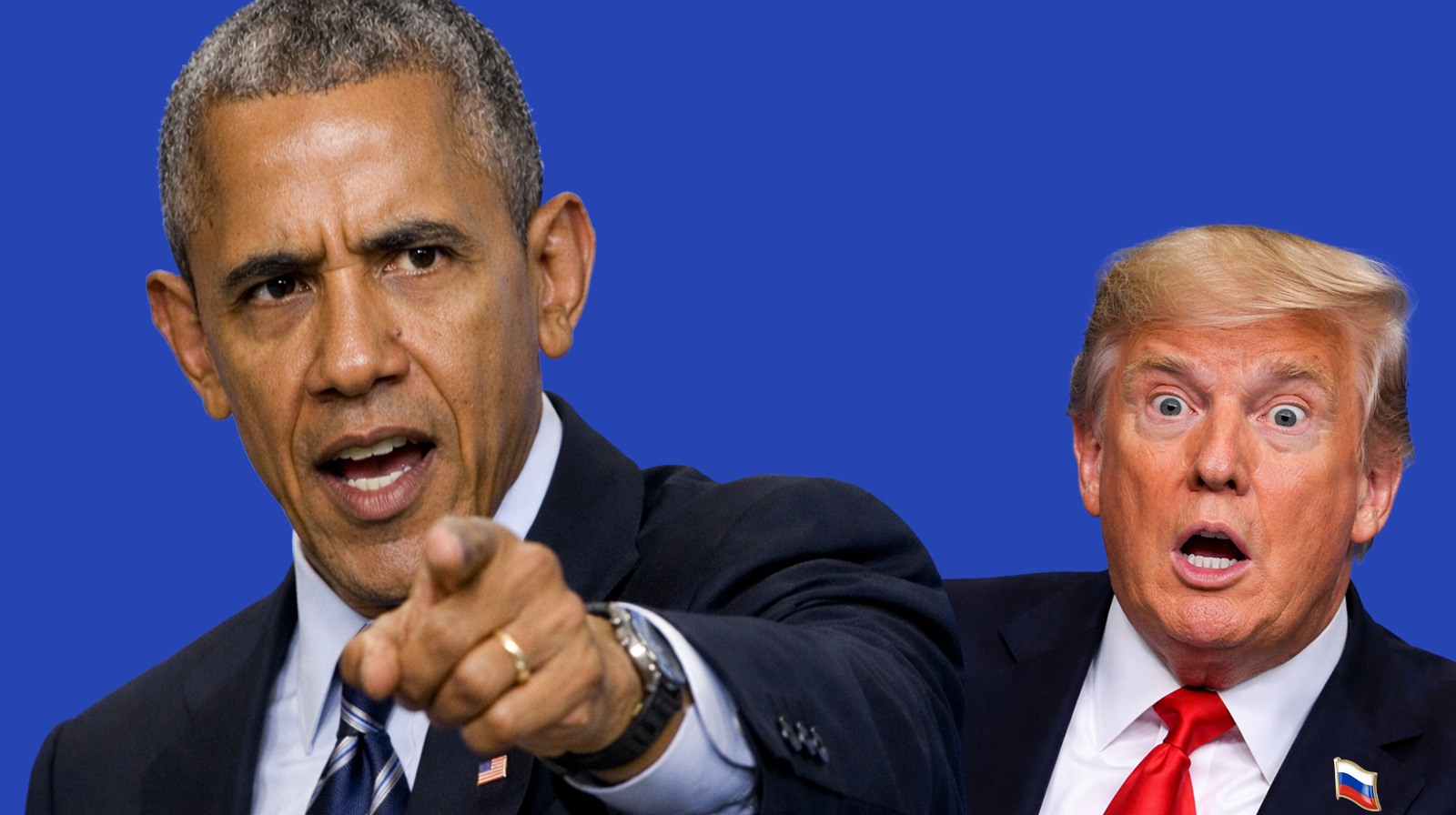
The Adult in the Room Returns
The “ape video” incident served as the grim backdrop for a rare, expansive interview Obama granted to progressive political commentator Brian Tyler Cohen. The conversation did not merely address the video. It used the incident as a fulcrum to leverage a much broader, devastating critique of the Trump presidency.
Obama, displaying a sharpness often sheathed during his post-presidency, poured gasoline on the already rising flames of anti-Trump sentiment.
Obama’s interview offered a jarring counter-programming: coherent, systemic analysis delivered with a calmness that highlighted the manic energy of his successor. It was the return of the adult in the room, and the contrast was blinding.

Decoding the “Clown Show”
Cohen, seizing the moment, asked the former president directly about the “ape video” and the devolution of political discourse. Obama’s response was clinical. He did not feign shock; he diagnosed a pathology.
“First of all, I think it’s important to recognize that the majority of the American people find this behavior deeply troubling,” Obama stated. He acknowledged the efficacy of Trump’s tactics in the short term, noting, “It is true that it gets attention. It’s true that it’s a distraction.”
But then he pivoted to a moral argument that cut deeper than simple partisan bickering. He refused to let Trump set the terms of the engagement. Instead, he categorized the President’s behavior as a deviation from the American norm, an aberration that most people reject.
“There’s this sort of clown show happening in social media and on television,” Obama observed, “and what is true is that there doesn’t seem to be any shame about this among people who used to feel like you had to have some sort of decorum and a sense of propriety and respect for the office. So that’s been lost .”
The phrase “clown show” resonated immediately across the media landscape. It diminished Trump from a terrifying authoritarian to a pathetic figure, a carnival barker screaming for attention while the tent collapses around him.
It stripped Trump of his power. Authoritarians rely on fear and awe; they cannot survive ridicule. By calling it a “clown show,” Obama invited the American people to laugh at the absurdity of it all, to see the smallness of the man behind the curtain.
Obama’s invocation of “shame” was particularly potent. It highlighted the total abandonment of standards that has allowed figures like Trump to thrive. Politics has always been rough, but there used to be lines.
There used to be things you just didn’t do because the shame of doing them would be too great. Trump has erased those lines. He has turned shamelessness into a superpower.
But Obama argued that this is a weakness, not a strength. He juxtaposed this Washington decay with the resilience of ordinary citizens he meets while traveling - people who “still believe in decency, courtesy, kindness.”
He effectively separated Trump from the people he claims to represent.
⭐⭐ ⭐⭐Subscribe for more fearless commentary. Your support keeps this space open and ad-free.⭐⭐⭐⭐
The Isolation of the Diapered Don
Obama’s assessment that the “majority of the American people” reject this behavior was borne out by the immediate political fallout. The “ape video” managed to do what few Trump scandals have done: breach the partisan firewall of the Senate GOP.
Republicans in Congress have spent years mastering the art of looking the other way. They have ignored tweets, dismissed scandals, and rationalized outrages. But this was too much. The visual nature of the racism, the undeniable history it invoked, made silence impossible.
The backlash extended into the religious community, a cornerstone of the Trump coalition. Catholic leaders, including Archbishop Weisenburger and prominent Black Catholic organizations, issued scathing condemnations. They urged the faithful to reject such “racist tropes” and commit to racial justice.
The sheer breadth of the condemnation validated Obama’s assertion: the “clown show” has a limited audience, and the exits are beginning to look appealing to the spectators.
The Minneapolis Crucible: Authoritarianism vs. Community
The interview moved beyond personal insults to the substantive dangers of the Trump administration’s policies. February 2026 has been a dark month for civil liberties, nowhere more so than in the Twin Cities.
A surge of federal enforcement operations has turned Minneapolis into a testing ground for a new, aggressive form of policing. Obama used this crisis to draw a sharp line between democratic governance and the tactics of dictatorships.
“Rogue Behavior”
Obama directed the conversation toward the chilling events unfolding in Minnesota. He described the deployment of federal agents as “rogue behavior” that one might expect in “authoritarian countries” or “dictatorships,” but not in America.
The language here is precise. He did not call it “bad policy” or “overreach.” He called it “rogue behavior.” He challenged the very legitimacy of the state’s actions.
The Sound of Resistance
Obama, however, refused to linger solely on the trauma. He used the Minneapolis crisis to highlight the resilience of the American spirit.
He pointed to the “extraordinary outpouring of organizing” that rose to meet the federal crackdown: neighbors buying groceries for those afraid to leave their homes, teachers shielding students, and citizens standing in subzero weather to document abuses.
This, Obama argued, is the true engine of democracy - not the machinations of Washington, but the refusal of ordinary people to be cowed. “That kind of heroic sustained behavior... is what should give us hope,” he said.
The contrast he painted was vivid: on one side, the cold, mechanical cruelty of the state; on the other, the warm, chaotic, defiant humanity of the people.
Conclusion: The Long Game Revealed
Obama’s interview with Brian Tyler Cohen was not a random media appearance; it was a strategic intervention. By stepping into the arena now, Obama is signaling that the water is safe. The shark is bleeding.
Obama’s concluding remarks spoke of agency. He reminded the audience that democracy is not a spectator sport.
“The answer is going to come from the American people,” he said.1 The “clown show” may be loud, and the “ape video” may be vile, but they are the dying gasps of a movement that has lost its ability to shock the country into submission.
The interview provided a moment of levity that underscored the difference between the two men. Trump is obsessed with enemies, conspiracies, and his own image. Obama is thinking about the universe, the future, and the game.
The gasoline has been poured. The flames are rising. And the arsonist in the White House looks like he’s the one getting burned.
⭐⭐ Feel free to share. The Art of Living articles are never paywalled.⭐⭐
You can watch the full video, below.
Excellent essay. Clear, well-written, and (for my taste) perfect in tone. A very Obama-like performance (and that's praise so high, I feel obliged to tell you I'm not BSing you).
TRUTH be told, NO politicians should be in a gerrymandering process. And he's right when a party gerrymanders it creates corruption. Drawing districts in the a state you have to have a nonpartisan group that doesn't take sides.