


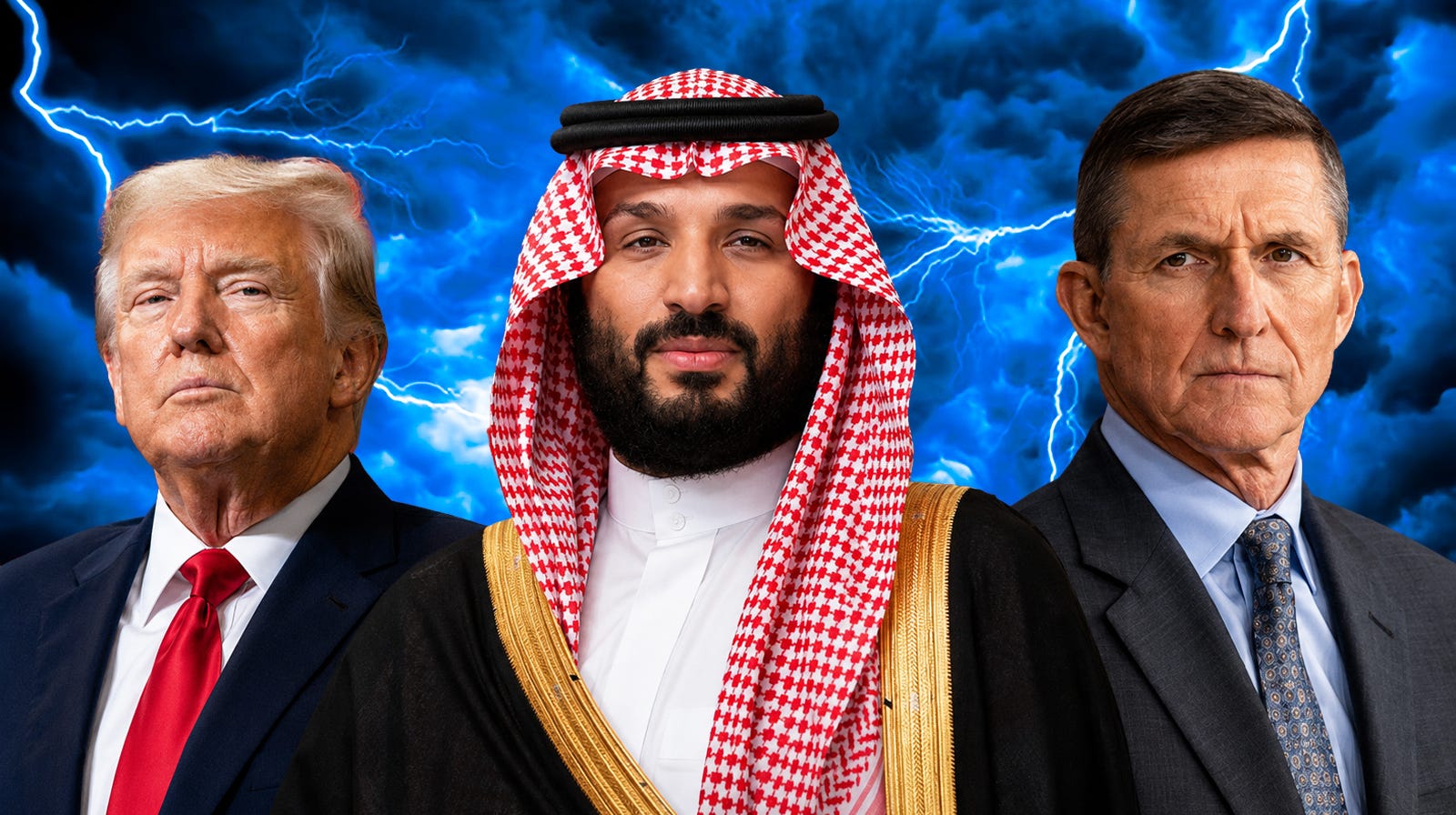
The formal execution of the 30-year civil nuclear cooperation agreement between the United States and Saudi Arabia on July 22, 2026, represents a permanent rupture in the global security architecture.
Signed under Section 123 of the Atomic Energy Act of 1954 by U.S. Energy Secretary Chris Wright and Saudi Energy Minister Prince Abdulaziz bin Salman, the multi-billion-dollar deal has been championed by the Trump administration as a commercial triumph.
By legally tying Riyadh’s emerging energy infrastructure to American nuclear vendors, Washington sought to revitalize its domestic industrial supply chain while blocking geopolitical adversaries in Moscow and Beijing from capturing a strategic foothold in the Persian Gulf.
Beneath this transactional veneer, however, lies a highly volatile decision that has triggered deep geopolitical panic, effectively dismantling decades of international nonproliferation consensus.
The agreement provides a direct, legally binding pathway for Saudi Arabia to establish domestic uranium enrichment capabilities.
This concession represents a total abandonment of the nonproliferation “gold standard” established in the 2009 US-UAE 123 Agreement, under which Abu Dhabi permanently renounced enrichment and reprocessing.
By allowing Riyadh to build the physical infrastructure for uranium enrichment on its own soil, the Trump administration has handed an authoritarian, belligerent state the latent capacity to develop nuclear weapons, triggering an uncontrollable, multi-polar nuclear arms race across the Middle East.

Operation Epic Fury: The Volatile War and Policy Contradiction
The strategic and military context of this agreement is extraordinarily volatile, signed during the fifth month of a devastating regional war between the United States, Israel, and Iran.
Initiated on February 28, 2026, under the American codename Operation Epic Fury, this joint campaign was launched specifically to destroy Iran’s offensive ballistic missile sites, dismantle its security apparatus, and permanently eliminate its capability to build a nuclear weapon.
Yet, even as American and Israeli forces bombarded Iranian enrichment sites, Donald Trump signed a separate national security waiver to bypass statutory nonproliferation baselines and grant Saudi Arabia a structured pathway to its own enrichment infrastructure.
This profound policy contradiction has drawn sharp bipartisan condemnation in Congress.
Critics, including Democratic Senator Edward Markey, point out the strategic absurdity of actively waging a high-intensity war to prevent Iranian enrichment while simultaneously exporting the exact same dual-use, highly sensitive technology to a neighboring monarchical regime.
The administration’s move has also sparked outrage in Israel. Former Prime Minister Naftali Bennett, leader of the Together Party, denounced the deal as a catastrophic failure that jeopardizes Israeli security and threatens to unleash a nuclear race across the Middle East, destroying the regional balance of power.
⭐ Thank you for being part of this community. A free or paid subscription helps keep my articles fearless, independent, and never hidden behind a paywall.⭐
Back-Channel Diplomacy: The Red Sea Yacht Summit and IP3 Lobbying
This strategic pivot is not a sudden, defensive wartime concession, but the direct culmination of a decade-long blueprint designed by private corporate interests and foreign power brokers.
The geopolitical architecture of the deal was first mapped out in late 2015 during a secretive gathering aboard a luxury yacht in the Red Sea.
Convened by international dealmaker George Nader, the “Red Sea Yacht Summit” brought together Saudi Crown Prince Mohammed bin Salman, Emirati Crown Prince Mohammed bin Zayed, and Egyptian President Abdel Fattah el-Sisi to engineer a “Grand Bargain.”
The proposed conspiracy sought to establish a pro-U.S., pro-Israel Arab coalition to isolate Iran, contingent upon a transactional U.S. presidential partner willing to unilaterally lift economic sanctions on Russia.
In exchange, Russian President Vladimir Putin would withdraw military support for Iran in Syria, paving the way for a massive, U.S.-backed civil nuclear program across the Middle East.
To operationalize the nuclear component of this project, a private company named IP3 International was established in June 2016 by retired, high-ranking U.S. military and national security figures.
Then-General Michael Flynn, who served as a consultant to an IP3 subsidiary, acted as the primary advocate for the company’s “Middle East Marshall Plan” within the transition team and subsequent administration.
Career National Security Council staff and ethics lawyers repeatedly warned that transferring sensitive nuclear technology to Saudi Arabia without a formal 123 Agreement and congressional review violated federal conflict-of-interest statutes and the Atomic Energy Act.
Political appointees systematically bypassed these legal protocols anyway, establishing the blueprint that eventually hardened into the 2026 agreement.
The Pakistani Nuclear Umbrella and the Regional Arms Race
The geopolitical danger of the 123 Agreement is further compounded by a newly formalized, sovereign mutual defense pact signed between Saudi Arabia and nuclear-armed Pakistan on September 17, 2025.
Forged in the aftermath of devastating Israeli airstrikes in Doha, this treaty declares that an attack on one nation is an attack on both.
Crucially, Pakistan’s defense minister explicitly declared that its atomic capabilities “will be made available” to Saudi Arabia if the kingdom’s security is compromised.
This arrangement provides the Saudi regime with an immediate external nuclear umbrella, buying the kingdom the critical strategic time necessary to construct the domestic industrial infrastructure required for its own sovereign breakout capability under the 2026 U.S. agreement.
⭐This post is public, so feel free to share it.⭐
A Three-Part Series - Intro | Part One | Part Two
This is not a hypothetical threat. The quiet dismantlement of global safety guardrails and the rush toward domestic uranium enrichment have aligned to turn the Middle East into an active atomic tinderbox, right now, even as a devastating regional war grinds on.
The Introduction lays out the framework: the July 2026 civil nuclear agreement, the active warfare of Operation Epic Fury, and why a separate presidential waiver has set off deep geopolitical panic from Washington to Jerusalem.
Part One dissects the raw transaction: the commercial windfalls of Westinghouse, the abandonment of nonproliferation “gold standards,” and the newly signed mutual defense pact that places Riyadh under Pakistan’s sovereign nuclear umbrella.
Part Two exposes the decade-long conspiracy: the secret 2015 Red Sea yacht summit, the back-channel lobbying of IP3 International inside the Trump White House, and how a rogue corporate scheme to enrich retired generals became official, binding U.S. foreign policy.
Don’t miss the next installment. Subscribe below — it takes thirty seconds.

In the last several hours, I’ve read one extremely dangerous revelation after another-ridiculously stupid (or calculated?) moves made by the Trump administration.
First, I read about some sort of scheme to sell sunlight via mirrored satellites. The contract has been signed. Why? So that some company can sell sunlight to illuminate nighttime events from space. Numerous scientific entities protested based on the extraordinary damage this would cause across ecosystems, but whoever the regulating authority was (FCC? FAA? I don’t recall) said that concern was “beyond its scope”.
Second, we will reach, in August, the lowest point since the 1980s in our oil reserves. This is due to the extraordinary draw down of oil caused by Trump’s unnecessary war. It will cause gas prices & inflation to significantly increase & inflict hardship on everyone. It will render us incapable of fighting a war. (What are the implications of that?)
And now, we have a brand new arms race brewing in the Middle East. Israel is already a nuclear power with perhaps as many as 400 nuclear warheads in its possession; we don’t know how many because our “good friend”, Israel, won’t say.
I’m not sure if this is just a result of colossal stupidity or it’s by design to make the USA extremely vulnerable to its adversaries. But I do know this is the result of the Republican Congress, with some help from idiot Democrats, rubber stamping each & every thoroughly unqualified appointee Trump proposed.
It’s the result of those same Congress members sitting on their gawddamned hands, doing nothing, as Elon Musk & DOGE fired well-qualified experts & dismantled our government, health & educational institutions.
Congress members are looking at their stock portfolios & nothing else. The gross incompetence, & in some cases, treasonous aspirations of some members, are criminal.
ALL of this could have been avoided. ALL OF IT!
Excellent analysis; thank you for providing it and for enlightening those who have been unaware of the dire consequences of these actions.